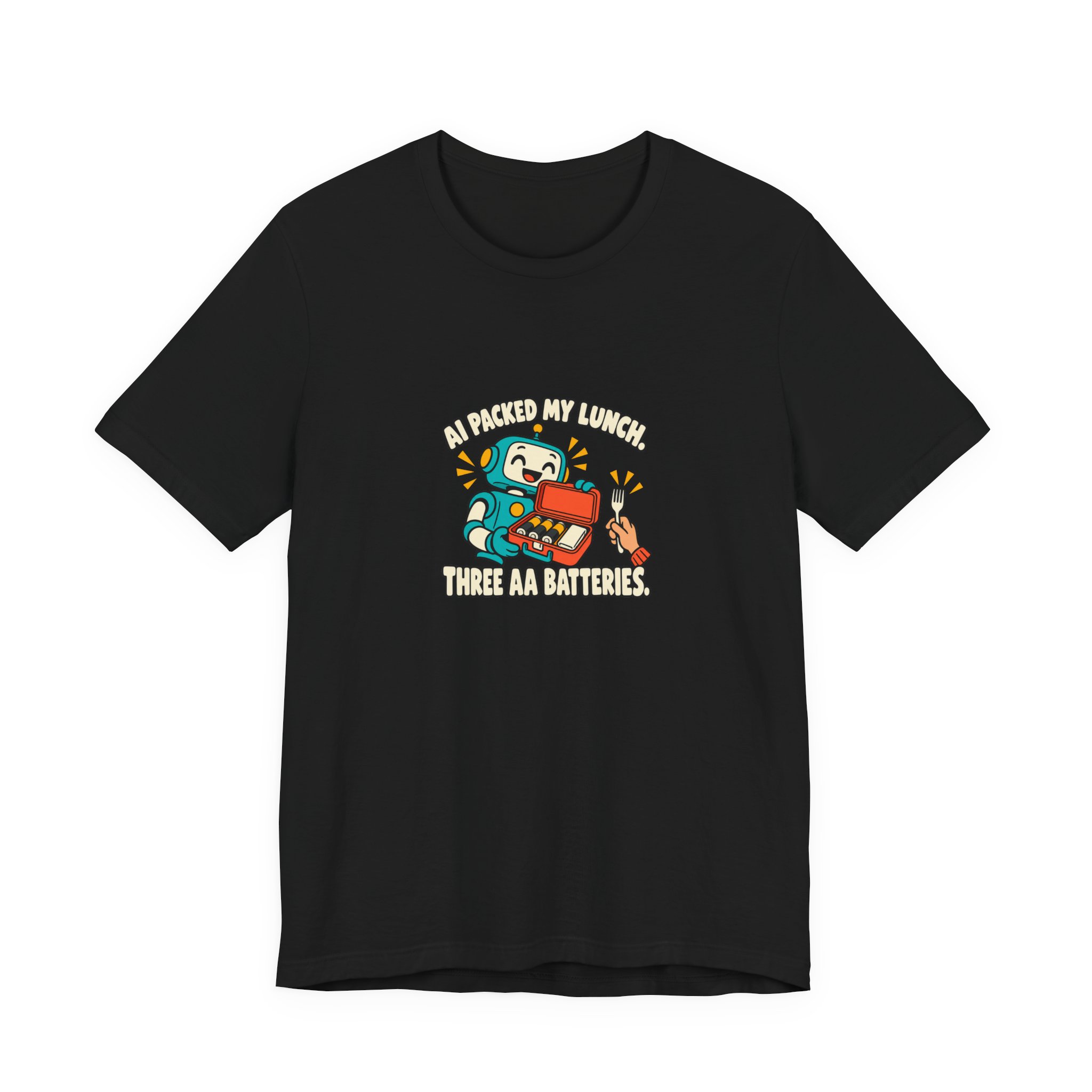
A graphic tee needs room for both the wearer and the punchline. Fit describes how the garment sits; placement describes where the illustration sits on that garment. Check each separately, using the exact shirt’s measurements and mockups.
Measure the garment you already trust
- Lay a favorite clean T-shirt flat without stretching it. Smooth the main folds.
- Measure across the chest at the chart’s stated point and measure length from the stated shoulder or neckline point.
- Record whether the numbers are inches or centimeters. One inch equals 2.54 centimeters.
- Compare flat garment measurements with flat garment measurements. A flat width is not a full body circumference.
The shirt measurement guide provides the current measuring reference. If you are between sizes, use your preferred ease and the product information rather than a rule such as “always size up.” Shrinkage and care claims must come from the actual garment listing.
Check the picture on the shirt
Open the front mockup and look at the graphic relative to the collar, chest, and side seams. A joke with several text lines can feel visually larger than a simple badge even at the same width. Use the artwork close-up to inspect the lettering, then return to the shirt view to check its scale.
The new AI illustrations are prepared for a front graphic up to about eight inches wide on our Bella+Canvas 3001 T-shirts. Mockups show intended placement; use them alongside garment dimensions when comparing sizes.
Give the punchline some breathing room
- Choose a fit you enjoy independently of the joke.
- Read the complete setup and payoff in the mockup, not just the product title.
- Check that the colors suit the garment shown; pale lettering needs a dark ground.
- Use care information from the exact shirt and avoid assuming every product shares the same instructions.
After checking fit, see the shirt designs. A readable joke is more useful when the shirt is one you would choose from the drawer again.
Keep measurement and style decisions separate
Flat chest width tells you about the garment’s width. Body length tells you how far it hangs. Neither number alone tells you how a shirt feels at the shoulders, sleeves, or waist. Start with a favorite tee of a similar shape, then use the chart as a comparison rather than a prediction of every aspect of fit.
Measure twice if a small difference would change your choice. Keep the tape flat and record units beside each number. If the reference shirt has been washed many times, remember that it represents the fit you currently enjoy, while the product listing describes its own garment measurements and tolerances. Do not invent a shrinkage allowance when the listing does not provide one.

This diagram explains the method. Use the exact garment’s chart for the numbers. If you need help deciding between a joke and a graphic scale, check both before selecting a size; a larger shirt size is not a substitute for choosing a graphic you like.
Choose your product and options, then check out for delivery within the United States.