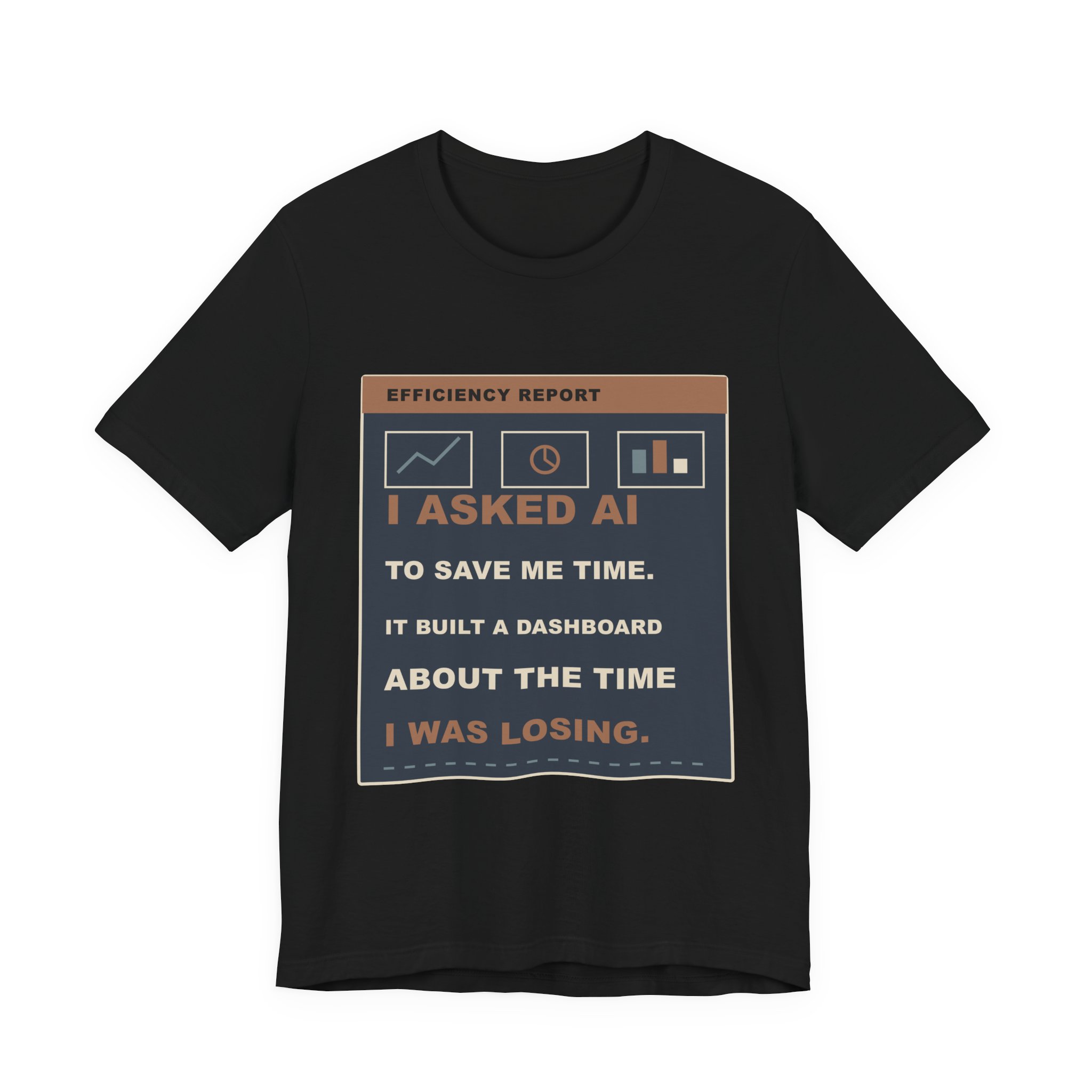
An original funny T-shirt starts with a specific human truth, explores more than one comic turn, survives a cold read, and still feels worth wearing after the surprise is familiar. Wording research and rights review are required checkpoints, not a promise that a quick search proves legal clearance.
This guide documents the reader-facing Funny Or Dye process and gives shoppers a practical way to evaluate a design. It is not legal advice. For fit and gift decisions, visit the Funny T-Shirt Guides hub.
Originality starts with the premise
The premise is the plain truth underneath the joke: the meeting created more work, the time-saving dashboard consumed the afternoon, the urgent task stopped mattering when it was finished, or the laundry somehow entered another reporting period. Writing that truth clearly prevents typography or a familiar format from pretending to be the idea.
From one premise, explore genuinely different comic turns. A workplace frustration might be reframed through security, shipping, finance, bureaucracy, or technology. Twenty synonyms for the first line are not twenty concepts. Different frames reveal which version has a point of view and which one merely sounds like merchandise.
The six-stage Funny Or Dye review
1. State the human truth
Write the recognizable situation without trying to sell it. Name who experiences it, what changes, and where the tension lives. A clear premise gives every later choice something to serve.
2. Generate different turns
Move the same truth through unrelated systems and voices. Dry, absurd, bureaucratic, earnest, and cheerfully overconfident treatments can lead to different jokes. The goal is not maximum weirdness; it is a line whose comic turn becomes clear without a footnote.
3. Score the finalists
Scoring creates a shared comparison, not an automatic launch button. Finalists are checked for premise clarity, specificity, voice, speed, audience fit, visual potential, and second-wear value. A high total cannot erase a rights concern or a cold-reader failure.
4. Use a cold reader
A cold reader sees the line without the brainstorm, intended explanation, or creator’s tone of voice. Ask what they think the premise is, where the turn happens, who is speaking, and who is being targeted. If the reader needs the pitch, the shirt will need it too.
5. Run the second-wear test
Imagine the design after the surprise is gone. Does the observation remain true? Does the voice still represent the wearer? Does the composition remain satisfying? The second-wear test separates a reveal from a durable point of view.
6. Research wording and review rights
Search the exact final wording and distinctive fragments for saturation, earlier attribution, and obvious conflicts. Review logos, characters, celebrity likenesses, song lyrics, screenshots, famous quotations, and recognizable artwork rather than assuming internet familiarity means public ownership. Escalate unclear cases for appropriate rights review.
No search, score, checklist, or internal review guarantees ownership, non-infringement, registrability, or legal clearance. Research can identify risks and stop weak ideas; it cannot turn uncertainty into a legal conclusion.
How the design performs the timing
Typography, hierarchy, spacing, contrast, and illustration determine the order in which the joke is read. A punchline that disappears at a normal viewing distance is not rescued by adding more fonts. An illustration that explains every detail can flatten the turn. The visual should guide the eye through the premise in the order the joke needs.
- Readable first: the main line should survive a quick browse and a real product mockup.
- Hierarchy with purpose: emphasis should reveal timing, not decorate every word equally.
- Point of view intact: the visual should strengthen the voice instead of replacing the premise.
- Product facts separate: artwork approval does not establish fit, material, care, production, shipping, or return facts.
Familiar is not the same as original
Internet repetition can make a phrase, image, character, or screenshot feel ownerless. Familiarity does not establish permission, and recognition alone does not make a result interesting. Moving a popular post onto fabric adds a product, not necessarily a point of view.
Original humor can begin with a shared experience. Its value comes from the creator’s specific observation and expression: a new line, angle, composition, character, or relationship among ideas. A short design can be original; it simply has fewer places to hide generic thinking.
A shopper’s originality check
- Can you identify a specific observation instead of only a familiar format?
- Does the joke make sense without a celebrity incident, unlicensed character, screenshot, or week-old trend?
- Do the type and artwork make the timing clearer?
- Can the intended wearer enjoy being represented by it?
- Would the idea still feel like their voice on a second wear?
- Does the seller explain its process and provide a way for creators or rights holders to make contact?
These questions do not prove ownership or legality. They help distinguish an intentional, documented point of view from a copied cultural artifact.
See the process in the store
The About Funny Or Dye page gives the concise brand version of this process. Shop by design lets you evaluate the joke before choosing a shirt, hat, or mug. Product listings then own the current garment, variant, price, availability, care, production, delivery, and policy facts.
If the design is a gift, the funny T-shirt gift guide adds recipient, room, fit, and timing checks. If the garment decision comes first, use the graphic T-shirt fit guide before comparing the current store chart.