If you do not know someone’s clothing size, do not guess. Measure a favorite shirt they already wear, ask them or someone who knows, or preserve their choice of product and size. Choose a mug or adjustable hat only when it matches a habit—not merely because it avoids the question.
The quickest honest decision
| What you know | Best next move | Why |
|---|---|---|
| You can access a favorite T-shirt | Measure that garment flat and compare it with the exact product chart | You are matching a preferred fit, not estimating a body |
| A partner, roommate, or sibling knows | Ask for the usual T-shirt size and preferred fit | A specific answer beats an elaborate surprise with the wrong result |
| You know the joke but fit confidence is low | Offer the design and let the recipient choose product and size | The personal part remains yours; the practical choice remains theirs |
| They regularly use mugs or wear adjustable hats | Choose that familiar format | Lower size risk still feels thoughtful when it follows a real habit |
| You know none of the above | Ask before buying | A useful gift is better than a perfect surprise in theory |
Use the size-risk ladder
Not every product asks the same amount of personal information from the buyer.
- Lowest size risk: mug. No body measurement, easy to use at home or work, and the joke can become part of a daily ritual.
- Moderate preference risk: adjustable hat. Less sizing uncertainty, but only a good gift if the person already wears hats or has expressed a desire to begin having a hat era.
- Highest size risk: T-shirt. Often the most expressive option, but fit preference matters as much as the letter on the label.
When a mug is thoughtful, not a fallback
A mug is a strong choice when the recipient has a daily coffee or tea routine, keeps a cup at work, likes small repeat-use objects, or would enjoy the joke in a private setting. It is weaker when they avoid hot drinks, live in a home already experiencing Mug Population Pressure, or have strong minimalist tendencies.
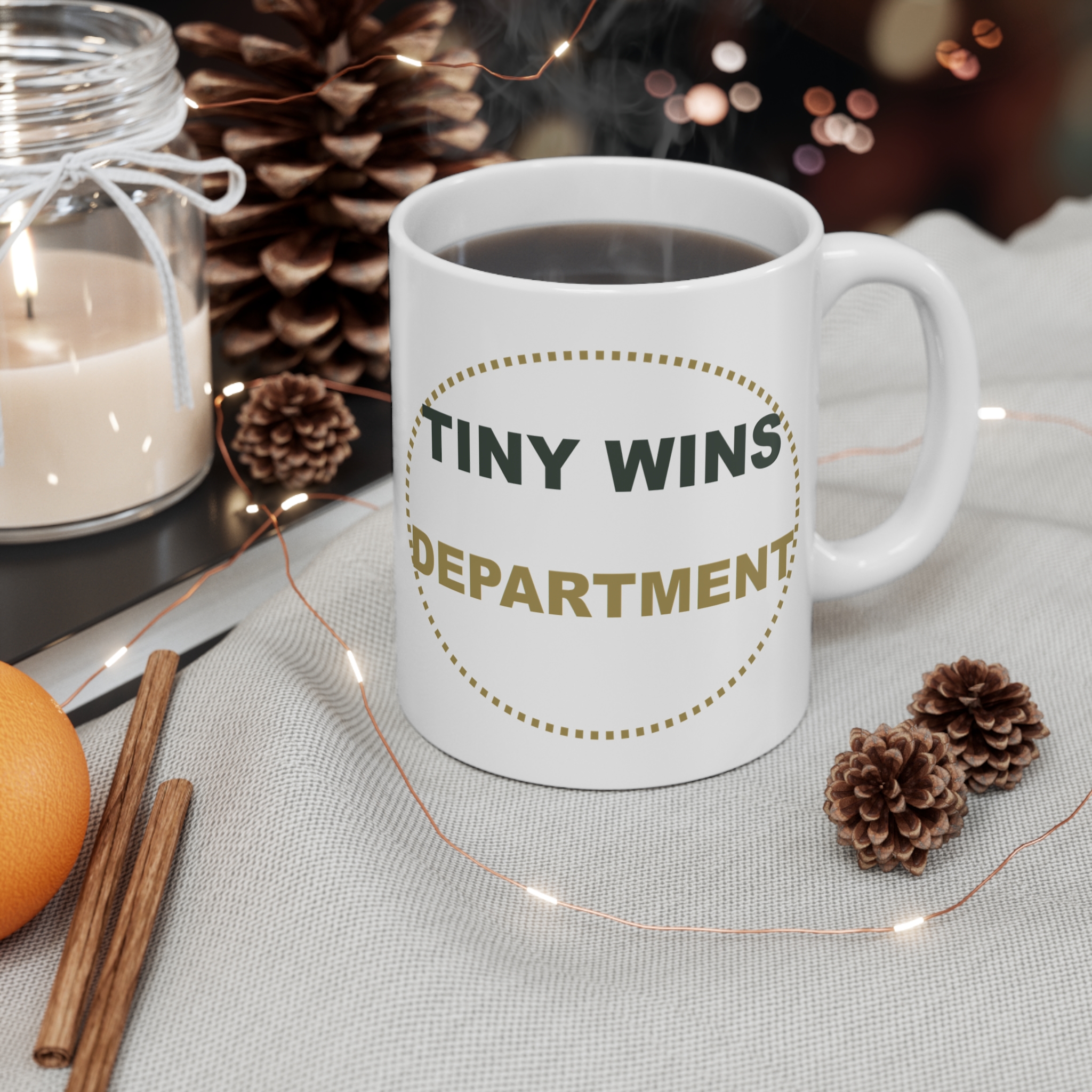
Make the choice personal by connecting the design to a habit: a dinner-decision joke for the household strategist, a buffering-plans joke for the desk calendar optimist, or a “tiny wins” message for the person who celebrates sending the email before lunch.
The quiet measurement method
If a T-shirt is clearly the right gift, measure a shirt they already wear and like. Lay it flat without stretching it. Record the width across the chest from armpit to armpit and the length from the high shoulder point to the hem. Compare those garment measurements with the chart for the exact product.
A flat shirt width is a garment measurement, not a body circumference. Confirm what the product chart measures before comparing numbers, and use the chart’s own diagram when it provides one.
- Use a similar style of shirt, not a fitted dress shirt or a sweatshirt.
- Check whether their favorite fit is relaxed, standard, fitted, or intentionally oversized.
- Do not rely only on the size label. Brands and cuts use the same letters with the confidence of people who have never met.
- Read the exact product page for current measurements and care information.
Ask without destroying the surprise
Surprises are nice, but usefulness is nicer. You can ask indirectly: “I’m updating my contacts—what T-shirt size do you usually prefer?” This is not subtle, but neither is giving someone a shirt. You can also recruit a partner, sibling, or roommate who already knows. Tell the helper exactly what you need so they do not return with pants size, shoe size, and a full oral history.
Use a choice-preserving gift note
If fit confidence stays low, preserve the joke and give the recipient control. A note can say, “I picked this design for you; you pick the product and size because I respect both your style and the limits of my surveillance operation.” Check the store’s actual policies and available options before promising a return, exchange, or delivery date.
Avoid the three common bad shortcuts
- Do not estimate from appearance. A body is not a size chart, and preferred fit cannot be seen from across a room.
- Do not treat every brand’s label as interchangeable. Compare the dimensions of the exact product with a garment the recipient likes.
- Do not promise that an exchange will solve it later. Read the current store policy before the gift depends on a return, exchange, deadline, or delivery estimate.
The no-size decision checklist
- Do they regularly use mugs?
- Do they regularly wear hats?
- Can you measure a favorite T-shirt without creating a small household mystery?
- Would letting them choose the product make the gift more useful?
- Have you checked live pricing and the specific product page?
The Funny Gift Finder can prioritize mugs and hats when size confidence is low. You can also compare formats in Mug, Hat, or T-Shirt? or return to the Funny Gift Guides.